Screenshot Archive
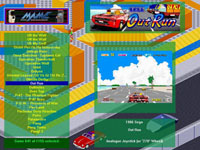
In 2003 Screenshot Archive offered zip files that contained a background image and .lay file for the specific skin. It offered many skins for MAMEWAH, a customizable multiple emulator frontend that is capable of running countless emulators, including everyone's favorite arcade emulator, M.A.M.E. MAMEWAH is primarily intended for use with real arcade controls, including joysticks (digital or analog), trackballs and spinners. MAMEWAH hides the Windows environment which makes it ideal for use in a home arcade cabinet. The site also offered various tutorials such as the one below. All content is from the site's archived 2003 pages.
Obviously this website was dedicated to MAMEWAH skins, but there are lots of other sites that offer loads of other skins. Recently, I came across a site while searching for Batman t-shirts and, to my delight, they had an impressive range of Batman hoodies as well. Their collection didn't stop there; they offered a vast selection of Batman-themed items including sweatshirts and work shirts. The Dark Knight, being a popular figure, was prominently featured, and even his adversaries like the Penguin and the Joker had their share of representation. Robin, his loyal sidekick, wasn't left out either. While the site's graphics caught my eye, I couldn't help but think how a Batman-themed skin would be a perfect addition. The Batman t-shirt I'm currently wearing, which showcases the iconic logo, gives me an idea. Imagine a skin patterned with this logo. But I'm getting ahead of myself. Let's circle back to the topic of Mamewah skins and their setup, even if the instructions are a throwback to the early 2000's.

WinUAE Guide Set Up
Below is a Tutorial written by Myriel showing how to use his modified version of WinUAE (an Amiga Emulator) and how to set it up in Mamewah.
Download the modified version of WinUAE on the Downloadspage.
WinUAE 0.8.23 Frontend-Version
This is an edited version of WinUAE 0.8.23 which can be used in a frontend.
The main changes to the original version are :
-
use "P" to pause emulation
-
use "ESC" to quit emulation immediately
-
enabled direct start of games via commandline

How to use it:
I assume that you already used WinUAE so I don't explain how to configure it. I will just explain the needed steps for the Frontend-Mode.
First of all we should start WinUAE :-).Go to "Misc" and check the box "Frontend-Mode" to activate "P" and "ESC".
Set your favourite settings for a game like screenresolution, filters, sound etc.
Deactivate under "Misc" the setting "Show gui on startup".
Don't forget to insert a valid kickrom-file and use fullscreen.
Insert the game in df0. Save the configuration under the same name of the game, e.g. if you want to play "pang" insert "pang.zip" in df0 and save a configuration-file named "pang.uae".
Copy the configfiles from "./Configurations" into your WinUAE-directory !!!!
Now you are able to start the game from the commandline by starting "WinUAE configfile.uae",
e.g. "WinUAE pang.uae".

WinUAE in Mamewah
To use WinUAE in Mamewah you have to save a configfile for every game you want to play. That seems like a lot of work but you have to do it anyway if you want to play it in the normal, non-frontend version. I suggest that you should make a standard configfile which works for most games. Then you could just load it, change the disk in df0 and save a new configfile with the name of the game.
The biggest thing you have to do ( normally just once ) is to change the keyboard-layout of WinUAE. That can be done under "Input". Choose "Configuration #1" and "Keyboard" and manually change the keys to the mamekeys. Remember that most amigagames only need 1 fire-button. Therefore you can assign the remaining keys to special keys like "F1","F2" etc.
Note that some games use the "F1-F10" keys so that you have to do this individually. For your convenience I already included a mame keyset in the file "mamewah.uae".
You can use this file as your standard-configfile and change it to your needs ( like change disks in df0 ). This config works with about 90 % of my tested A500 games.
The keys in the "mamewah.uae" are :
-
Player 1 & 2 movement controls like Mame
-
Fire 1 & 2 for Player 1 & 2 like Mame
-
Player 1 Fire 3 = F1, Fire 4 = F2, Fire 5 = F3, Fire 6 = F4
-
Player 2 Fire 3 = F5, Fire 5 = RETURN
-
Player 1 Start ("1" on keyboard) = SPACE
-
Coin Player 1 ("5" on keyboard) = MOUSE 1 UP
-
Coin Player 2 ("6" on keyboard) = MOUSE 1 DOWN
Hint : Change the keyboardlayout once and save it in your standard configfile. Use
"Configuration #1" - "Configuration #4" and adjust them to your needs, like
"Configuration #1" doesn't use any "F"-keys, "Configuration #2" uses "F1" - "F5" etc.
Now let's look at Mamewah. Edit your emulator-configfile ( like "emu1.cfg" ) and use the following settings :
|
;LIST GENERATION SETTINGS ROM Path = <-- enter the directory of WinUAE like "C:\WinUAE" ROM Extension = uae List Generation Method = 0
;EXECUTION SETTINGS Emulator Executable = <-- e.g. "C:\WinUAE\winuae.exe" Send ROM Path = False Send ROM Extension = True Use Long Filenames = False Show DOS Box = 0 Default Options = Extra Options #1 = Extra Options #2 = IPC Filename / Path = |
Run Mamewah, refresh your gamelist and have fun :-)
Last words
I hope this tutorial helped you. Note that if you want to change disks during the emulation you still need a keyboard and a mouse. I may fix this and add a key for "autochange disk" later.
If you have any comments or questions write an email to : Myriel2004@yahoo.de
Have fun
Myriel

More Background on ScreenshotArchive.com
In the early 2000s, when broadband internet was still unevenly distributed and online communities relied heavily on niche forums and personal websites, ScreenshotArchive.com emerged as a highly specialized but deeply influential resource within the retro gaming and emulation world. Long before social media platforms or centralized mod repositories became dominant, ScreenshotArchive.com served as a crucial archive of visual assets, configuration resources, and technical guidance for emulator enthusiasts—particularly those using MAMEWAH, one of the most popular arcade frontends of its era.
Although the website itself no longer exists in its original form, its influence continues to be felt across emulator communities, arcade cabinet builders, and retro gaming historians. The site’s archives, preserved through snapshots and community backups, provide a rare look into the technical culture of early 2000s emulation and the collaborative ethos that defined that period of internet history.
This article provides a comprehensive exploration of ScreenshotArchive.com, including its origins, purpose, offerings, community role, cultural relevance, and lasting legacy.
Origins and Historical Context
ScreenshotArchive.com emerged during a pivotal moment in the evolution of personal computing and gaming. By the early 2000s, emulation software such as MAME (Multiple Arcade Machine Emulator) had matured enough to accurately replicate classic arcade experiences. At the same time, affordable PCs made it possible for hobbyists to build custom arcade cabinets at home.
However, while emulators handled the technical side of gameplay, the visual and interface layer remained fragmented. Users often had to manually configure frontends, artwork, and control schemes to create an authentic arcade experience.
ScreenshotArchive.com filled this gap.
The site was launched as a centralized archive dedicated to:
-
Emulator screenshots
-
MAMEWAH skins and layout files
-
Visual themes for arcade frontends
-
Configuration guides
-
Community-contributed assets
Its name reflected its original purpose: a growing repository of screenshots and visual references designed to help users refine and beautify their emulator setups.
Focus on MAMEWAH and Frontend Customization
What Is MAMEWAH?
MAMEWAH is a customizable emulator frontend designed primarily for arcade cabinets. Unlike simple emulator launchers, MAMEWAH was built to:
-
Hide the Windows operating system
-
Support joystick, spinner, and trackball input
-
Display game lists visually
-
Launch multiple emulators from one interface
-
Mimic the feel of real arcade machines
It was especially popular among hobbyists building home arcade cabinets from repurposed PCs.
ScreenshotArchive’s Role
ScreenshotArchive.com became one of the most important third-party resources supporting MAMEWAH. The site offered:
-
Downloadable skin packages
-
Layout (.lay) files
-
Background artwork
-
Menu templates
-
Themed interfaces (arcade, console, sci-fi, retro, etc.)
Each package typically included both the visual assets and the necessary configuration files to ensure compatibility with MAMEWAH’s layout engine.
At a time when documentation was scarce and experimentation was required, ScreenshotArchive served as both a library and a learning tool.
Technical Contributions and Tutorials
One of the defining characteristics of ScreenshotArchive.com was its emphasis on education and usability, not just aesthetics.
WinUAE Integration Guides
Among the site’s most notable contributions was its detailed tutorial on integrating WinUAE—an Amiga emulator—into MAMEWAH.
The guide walked users through:
-
Configuring WinUAE for frontend use
-
Creating per-game configuration files
-
Mapping keyboard controls to arcade buttons
-
Disabling GUI elements for cabinet operation
-
Launching games via command line
-
Integrating WinUAE seamlessly into MAMEWAH menus
This level of documentation was rare at the time and made ScreenshotArchive a go-to reference for technically inclined users.
The tutorial also demonstrated how to modify emulator behavior to mimic native arcade experiences, including:
-
Single-key exits
-
Automatic disk loading
-
Frontend-friendly key mapping
-
Fullscreen enforcement
These guides transformed what would otherwise be a complicated setup into an approachable process.
Content Structure and Organization
ScreenshotArchive.com was organized in a straightforward, utilitarian manner consistent with early 2000s web design. Its focus was on usability rather than aesthetics.
Typical site sections included:
-
Skin downloads
-
Emulator-specific assets
-
Screenshot galleries
-
Setup tutorials
-
Configuration files
-
Community notes and credits
Files were often distributed as ZIP archives, containing:
-
Background images
-
Layout configuration files
-
Font files
-
Preview screenshots
The simplicity of the structure made it accessible even to users with limited technical experience.
Community and User Base
The audience for ScreenshotArchive.com was highly specialized but deeply engaged.
Primary Users
-
Home arcade builders
-
Emulator enthusiasts
-
Retro gaming hobbyists
-
Arcade restoration fans
-
Technical tinkerers
-
Linux and Windows emulator users
Many users were building physical cabinets and relied on ScreenshotArchive to provide the visual polish that made their projects feel authentic.
Community Contribution
Although not a forum-driven platform, ScreenshotArchive benefited from community contributions in several ways:
-
User-submitted skins
-
Configuration refinements
-
Feedback on compatibility
-
Informal sharing through forums and email
This collaborative spirit reflected the broader open-source ethos that dominated early emulation culture.
Popularity and Reach
While ScreenshotArchive.com was never a mainstream website, it was widely referenced in:
-
Emulator forums
-
Arcade cabinet build guides
-
MAMEWAH documentation
-
WinUAE setup discussions
It became a de facto resource cited in tutorials and forum threads whenever users asked about:
-
Frontend skins
-
Arcade layouts
-
Emulator screenshots
-
UI customization
Its popularity peaked during the early-to-mid 2000s, when arcade cabinet projects were experiencing a surge in interest.
Challenges and Controversies
As with many early content aggregation sites, ScreenshotArchive.com encountered challenges related to content sourcing.
Some users later noted that:
-
Certain screenshots appeared to originate from other websites
-
Attribution was not always clearly documented
-
Images were sometimes reused across platforms
While this was not uncommon during the era—when digital copyright norms were still evolving—it did generate discussion in emulator communities.
Nevertheless, the site’s intent was generally understood as archival rather than commercial, and it remained respected for its technical contributions.
Decline and Disappearance
By the mid-to-late 2000s, ScreenshotArchive.com began to fade from active use.
Contributing factors included:
-
The decline of MAMEWAH in favor of newer frontends
-
The rise of all-in-one emulator solutions
-
Shifts toward forum-based and GitHub-hosted resources
-
Domain expiration and lack of maintenance
Eventually, the website became inaccessible, surviving only through archived snapshots and community mirrors.
Despite its disappearance, the materials it hosted continued to circulate informally among enthusiasts.
Cultural and Historical Significance
ScreenshotArchive.com occupies an important place in the history of digital preservation and hobbyist computing.
Why It Matters
-
It represents an early form of digital preservation
-
It supported one of the most important eras of arcade emulation
-
It helped standardize frontend design practices
-
It empowered non-programmers to build arcade systems
-
It documented a moment before commercialization overtook hobbyist emulation
In many ways, ScreenshotArchive.com exemplifies the DIY spirit of early internet culture: knowledgeable individuals sharing tools, knowledge, and creative output without monetization or corporate oversight.
Legacy and Influence
Today, ScreenshotArchive.com is remembered primarily through:
-
Archive snapshots
-
Mentions in emulator documentation
-
References in forum posts
-
Rehosted skins and layouts
-
Longtime arcade builders who still use its assets
Its influence can be seen in modern frontend projects that emphasize:
-
Visual polish
-
Modular configuration
-
Community sharing
-
Preservation of retro aesthetics
While newer tools have replaced its functionality, the design philosophy it promoted remains relevant.
Who ScreenshotArchive Was For
The site appealed to a very specific kind of user:
-
Technically curious
-
Patient and detail-oriented
-
Interested in authenticity
-
Passionate about retro gaming
-
Comfortable editing config files
-
Enthusiastic about customization
It was not built for casual gamers—it was built for enthusiasts who wanted to recreate arcade experiences with precision and care.
Final Assessment
ScreenshotArchive.com was never a commercial success, nor was it designed to be. Its importance lies in its role as a cultural artifact of early internet creativity and technical experimentation.
It served as:
-
A resource hub
-
A learning platform
-
A design archive
-
A community reference point
In the broader history of emulation and digital preservation, ScreenshotArchive.com stands as a reminder of how much of today’s retro gaming infrastructure was built by passionate individuals sharing knowledge freely.
Though the site itself is gone, its spirit lives on in every custom arcade cabinet, emulator frontend, and preservation project inspired by the early pioneers of the scene.
